
Alcides Parajeles
Costa Rica's famed environmentalists life reads like a soap opera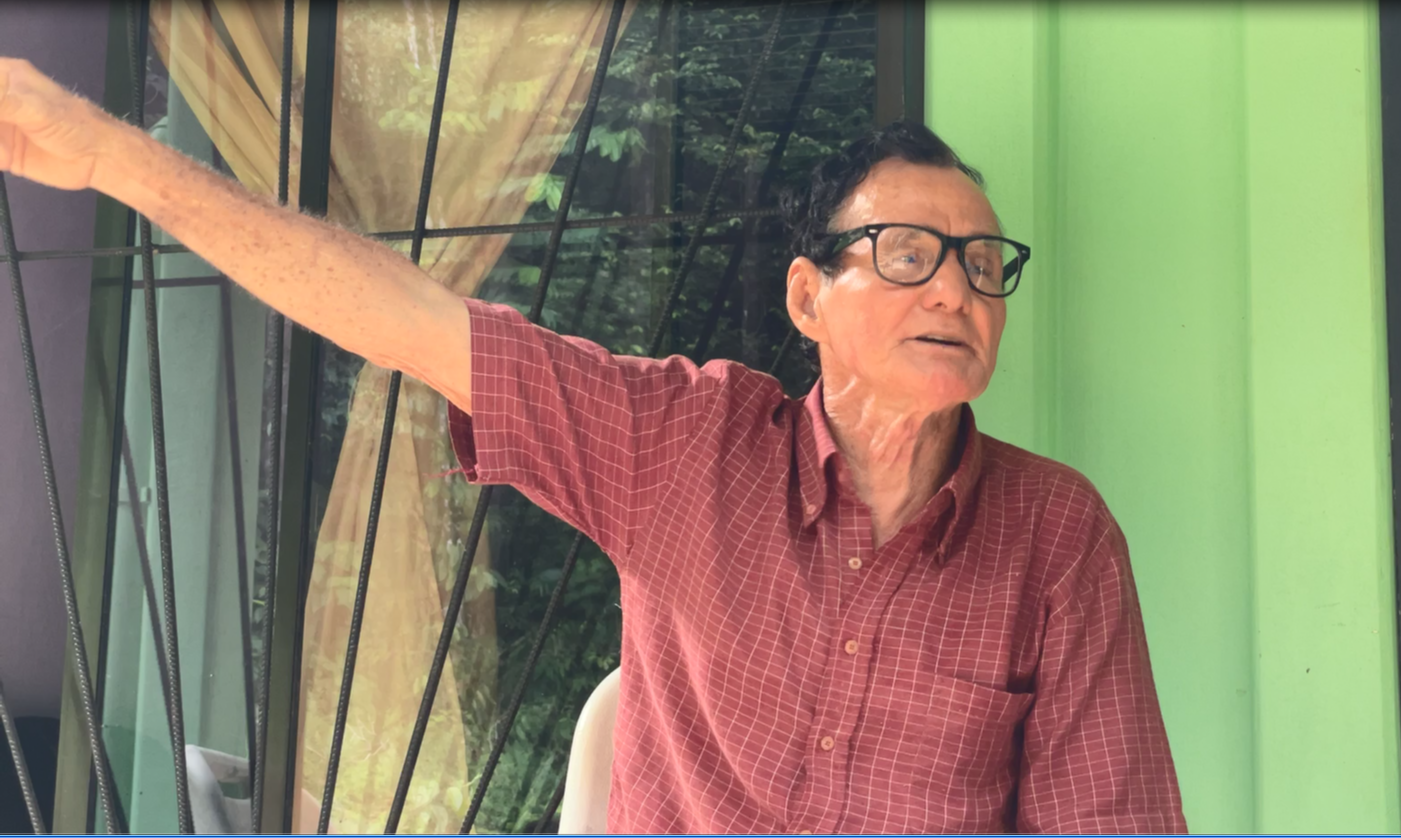
Originally printed in

Dubbed the “environmentalist peasant,” Alcides Parajeles has endured threats, harassment and, in some cases, violence as he voices his concern about the destruction of the natural environment around him. The story reads like an unbelievable soap opera involving organizations meant to help, but that are somehow ineffective at protecting environmentalists like Parajeles.
Parajeles has dedicated his life to condemning poaching, trafficking and illegal logging in the Osa Peninsula region of Costa Rica. Going against poachers and loggers for many years has put him in dangerous situations and brought unexpected political responses.
Most recently (December 2021), the Costa Rican Federation for Environmental Conservation (FECON) sent a message to Andrea Meza, Costa Rica’s Minister of Environment and Energy, on behalf of Parajeles, hoping to relieve him and his family of harassment.
The message included a reminder that Parajeles received the Guayacán award from the Ministry of Environment and Energy (MINAE) in 2017. He continues to fight the battle “despite his advanced age and continues to actively fight to denounce hunters, loggers and traffickers of wild animals in Osa.” (1) El mensaje continuó diciendo que el Sistema Nacional de Áreas de Conservación (SINAC) local lo había atacado verbalmente y desestimó sus denuncias.
Meza was also told that Parajeles and his family are still receiving death threats and are being stalked by hunters. FECON questioned the Ministry to better understand why an elderly wildlife defender who was in danger and needed the support of local SINAC officials was not receiving help.
But Minister Meza did not acknowledge having received the message. The victims feel a certain amount of state abandonment after years of sending these requests for help without a solution.
A major concern is that Parajeles lives and farms among those he condemns, and they are his neighbors in Pavoncito de Sierpe. Wildlife trafficking is a lucrative business and involves organized crime gangs, making his pursuit even more dangerous.
Why fight?
Parajeles moved to the mountains when he was four years old. He remembers seeing jaguars, pumas and other wild animals in abundance. In a report published in La Nación, Parajeles, now in his 70s, tells how his heart broke when he saw wild animals being machine-gunned because the cats ate a rancher’s pig or calf. Now the number of jaguars and pumas is significantly reduced, not only because of the killing but also because of trafficking. (3)
If you take a photo of Parajeles, you can see the sadness on his face. His actions prove the love in his heart for his beloved mountain ecosystem and the need to preserve it.
His name is well known in Costa Rica’s courts, the Constitutional Court and the Legislative Assembly, where he denounces illegal hunting and environmental destruction. He has also exposed and denounced government officials for not doing their jobs.
Like all environmentalists, Parajeles is motivated to provide a better place for his children and grandchildren. He hopes they will continue the tradition and use what he has taught them about the environment. If these current practices of destruction are not stopped, there will be no nature left for them, not as he once knew.
Parajeles has a lot of knowledge to share and he does so freely with researchers, politicians, park rangers and conservation workers. To go further, he lends his 600-hectare farm to researchers studying felines on the Osa Peninsula.
Others in the battle
Many of those who have fought for the protection of the Costa Rican environment became victims of threats against them. Let us remember these brave environmentalists:
- Antonio Zúñiga was murdered in suspicious circumstances in 1989. He was opposed to illegal hunting in the Ujarrás Indigenous Reserve.
- Oscar Quirós was shot in 1992 after fighting against deforestation in Sarapiquí.
- David Maradiaga, leader of AECO, now known as COECOCEIBA-AT Costa Rica, disappeared for three weeks and was found dead.
- In 1995, fires in separate houses ended the lives of Wilfredo Rojas (geologist) and Elizabeth González. Both were professional members of the Campaign against the Sanitary Landfill in Cordel de Mora.
In the 1990s, threats were constant against many people who denounced environmental damage. Some were writers, journalists, environmentalists and engineers. Environmentalists were arrested while peacefully protesting deforestation on the Osa Peninsula. In 2008, the inhabitants of Perla de Guácimo were threatened for denouncing water pollution caused by pineapple cultivation. (2)
Threats and intimidation continue.
The big problems
As with many wildlife conservation and protection areas, the region where Parajeles lives does not have enough park rangers to patrol and protect the area. In 2018, FECON reported that 800 park rangers and equipment are needed to deal with the crisis. Most of the resources are destined for attracting and serving tourism in the National Parks, not for control and prevention. (4)
FECON says the lack of action by the Costa Rican state contributes to global wildlife trafficking, which is fueled by its profitability. It is the third most profitable illegal activity in the world, behind drugs and weapons.
Environmentalists feel helpless against the industry run by the big criminal mafia. But they continue to fight, even though their lives are threatened.
Many crimes go unpunished, as threats are often made in private without witnesses. The murders of environmentalists, of which there have been more than a dozen (many unsolved), also go unpunished due to the lack of park rangers and legal protection.
These stories are calling for the urgent need for legal protection for defenders of human rights and nature. Let us not forget these environmental protectors and the hard fight they have been waging all these years.
How the war on drugs impacts conservation
Costa Rica is not a country that comes to mind when thinking of cartel activity or cocaine. Because of its geographic location, Costa Rica is a bridge similar to Panama, connecting Colombia and the northern route. Despite the United States government’s attempts to make it seem like Colombia’s days of drugs and cartels are over, Colombia remains the largest producer of cocaine. A high percentage of the cocaine traffic leaving the South American country passes through Costa Rican air, water or land space.
Costa Rican authorities seized 57 tons of registered cocaine in 2020, 56% more than in previous years. Small submarines carrying local trade trucks have been intercepted, but airdrops are more common. This involves a small package dropped in the forest for local couriers to pick up and transport in a small single-engine plane to its next destination.
For these planes to take off, jungle landing strips are needed. More often than not, valuable trees have their bark removed around the base to dry them out and justify cutting them down. This dictates where these landing strips are located. When these illegal landing strips are created, there are multiple sources of income, one of which is the courier service, but the other is through the extraction and sale of the trees.
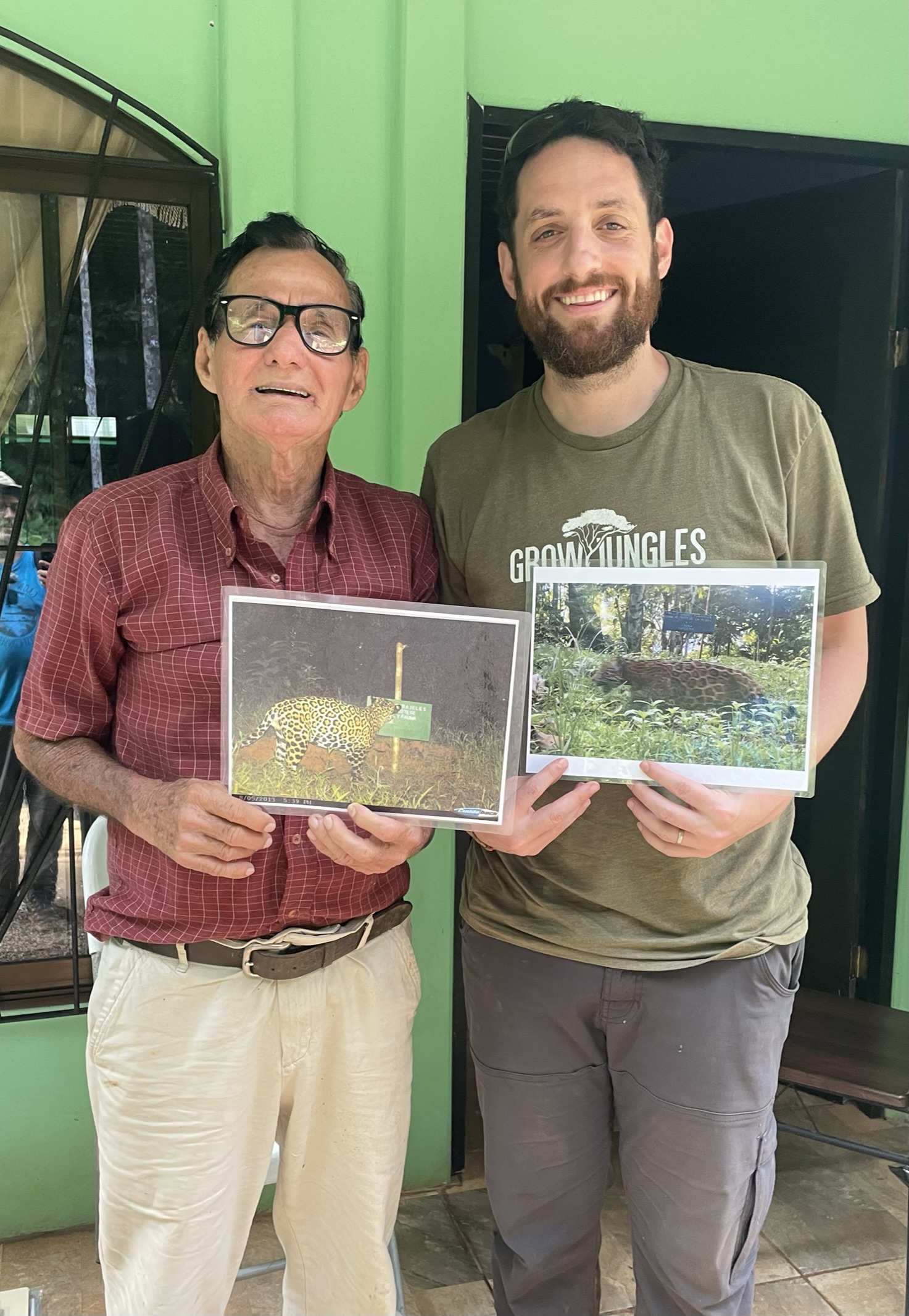
Parajeles told me about a recent situation that occurred in late 2021 where an illegal logger cutting down trees for an airstrip did not account for all the money earned by the cartel. He paid with his life. He was beaten and hanged in his own bathroom. Parajeles was one of the first people to hear about what happened. He arrived with his camera and took photos of the scene, including the body. He showed the raw images and told me the story of how he has been threatened by cartels and its impact on local environmental efforts.
Parajelis’ Perspectives on the Future of Poaching
When I asked Mr. Parajelis what he thought the future would bring or what might need to change, his answer was so direct: “My generation; the older generation must go to the parish, my generation is teaching the younger generation this way of life.”
Parajeles told me how the locally sponsored government program Fundación Neotropica had a program that reached out to rural families and children to teach them the importance of ecology and wildlife protection. Uncles and grandparents would take the same children out hunting as soon as the program was over, not out of defiance, but more as a way of life. It’s what they knew, and it’s how they came together. Parajeles knew this because they were his neighbors.
Como se mencionó en un artículo anterior The History of Hunting Peoples in Costa Rica , the history of the poacher or hunter is complicated.
Parajeles, the passion, bravery and courage is admirable. It is challenging to know that this is happening in a world-renowned country like Costa Rica. This is not to criticize Costa Rica’s efforts and environmental legislation in some respects, and they are leading the charge in how humans interact with the forest. Still, stories like this are reminders that we have a long way to go.
Finally, what caught my attention was something Parajeles said: “I didn’t know what an environmentalist or ecologist was, I simply knew right from wrong, and that our existence and future is not possible without animals and the forest.”
Join our mailing list
